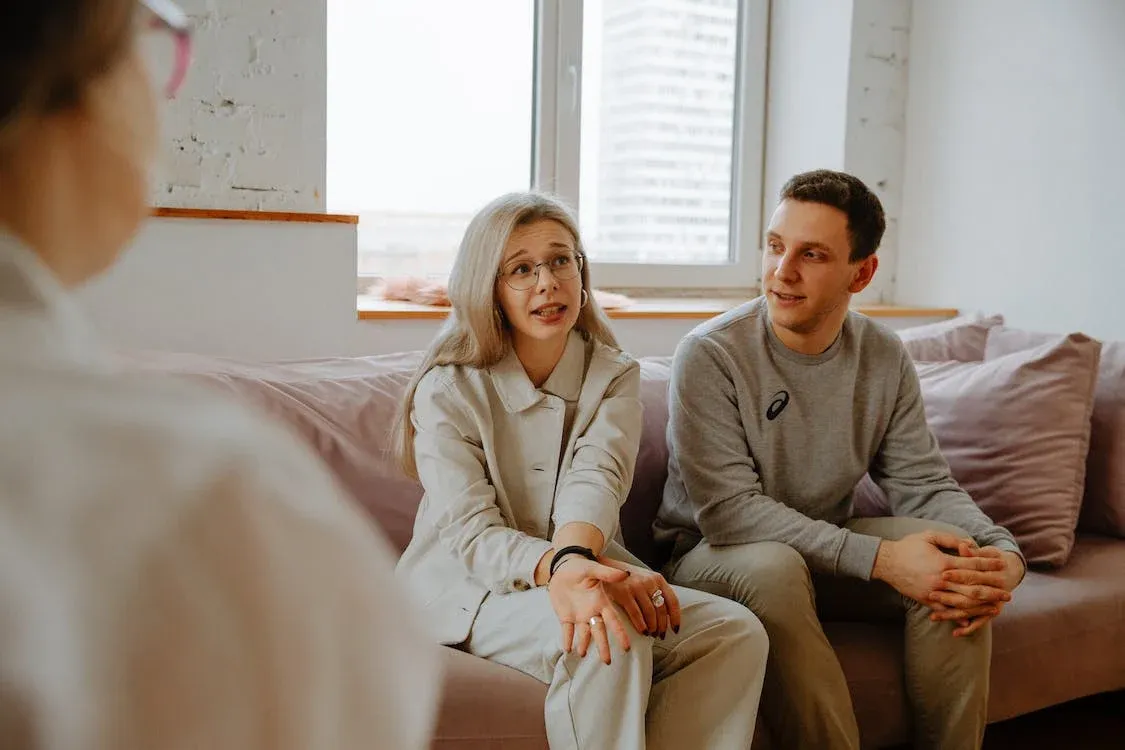
- Emotional unavailability is a pattern of difficulty sustaining closeness over time, not a diagnosis, and it can coexist with real love for a partner.
- Common signs include deflecting deep conversations, a push-pull rhythm with intimacy, a hidden inner world, and conflict that ends in stonewalling instead of repair.
- Roots often trace back to early attachment wounds, unprocessed loss, cultural messaging around emotion, or burnout, which can explain the distance without excusing its impact.
- Change is possible when the unavailable partner is willing to look inward, and couples or individual therapy can help build safer, more honest communication.
- Innovative Counseling offers licensed, bilingual therapy in person in Miami and via secure online sessions across Florida, with a free 15-minute consultation to get started.
If you have ever felt lonely in a relationship while your partner is sitting right beside you, you are not imagining things, and you are not asking for too much. Wanting to feel seen, heard, and emotionally met is one of the most human needs there is. When a partner keeps that closeness at arm's length, the ache can be confusing: everything might look fine from the outside, yet something essential feels missing. This post is here to help you make sense of that feeling with compassion, not to label anyone as broken or beyond hope. Emotional unavailability is a pattern, and patterns can shift.
What Emotional Unavailability Actually Means
Emotional unavailability describes a consistent difficulty with forming, tolerating, or sustaining emotional closeness. It is a description of behavior over time, not a clinical diagnosis, and no single article can tell you what is happening inside another person. It is also not the same as being introverted, having a stressful week, or occasionally needing space. All of us go through seasons where we have less to give. What sets emotional unavailability apart is that the distance is durable: the person struggles to stay present with their own feelings and, as a result, cannot fully show up for yours.
It helps to separate a few things that often get blurred together. Someone can love you deeply and still be emotionally unavailable. The two are not opposites. Love is a feeling; availability is a capacity. A partner may care about you sincerely yet lack the tools to translate that care into the presence, responsiveness, and vulnerability that intimacy requires. Understanding this distinction can soften the story you may be telling yourself, that you are unlovable or too needy. Usually neither is true.
Common Signs Your Partner Is Emotionally Unavailable
No single behavior confirms emotional unavailability, and everyone has an off day. What matters is the pattern over time and how it consistently leaves you feeling. As you read, notice which of these resonate rather than trying to build a case for or against your partner.
They deflect deeper conversations
- Serious topics get changed, joked away, or postponed indefinitely.
- Questions about feelings are answered with facts, logistics, or "I'm fine."
- You find yourself managing both sides of any emotional conversation.
Intimacy feels rationed
- Closeness appears, then quickly gets followed by withdrawal or distance, a push-pull rhythm.
- They pull back right when things start to feel good or secure.
- Physical affection may be present, but emotional openness rarely comes with it.
Their inner world stays hidden
- You know surprisingly little about their fears, hopes, childhood, or what actually moves them.
- Vulnerability from you is met with discomfort, advice, or subtle criticism instead of warmth.
- They rarely say "I felt hurt," "I was scared," or "that meant a lot to me."
Conflict gets shut down, not worked through
- Disagreements end in stonewalling, silence, or leaving the room rather than repair.
- Accountability is hard; apologies are rare or come with a caveat.
- Your attempts to reconnect after a fight are met with a closed door.
You do the emotional heavy lifting
Over time, one of the clearest signs is not something your partner does but how the relationship makes you feel: chronically responsible for the emotional temperature of the household, hesitant to bring up your needs, and quietly lonely. If you often shrink or downplay your feelings just to keep the peace, that is meaningful information worth paying attention to.
Why People Become Emotionally Unavailable
People are not born emotionally unavailable, and understanding the "why" can replace resentment with clarity. This is not about excusing hurtful behavior; it is about seeing it accurately so you can respond wisely. These are common contributing patterns rather than certainties, and they often overlap.
- Early attachment experiences. A child who learned that expressing needs led to rejection, ridicule, or absence often grows into an adult who protects themselves by staying closed. Distance once kept them safe.
- Unprocessed hurt or loss. A painful past relationship, a bereavement, or a betrayal can leave someone bracing against intimacy, as though closeness is a setup for more pain.
- Cultural and gender messaging. Many people, especially those raised to equate emotion with weakness, were never given permission or the language to feel out loud.
- Stress, depression, or burnout. Sometimes what looks like unavailability is a person running on empty, with little left over for connection. This can be temporary and often responds well to support.
Naming these roots is not the same as excusing the impact on you. Both truths can coexist: your partner may be carrying real pain, and you may still be genuinely hurt by the distance between you.
In my office, the person everyone calls "cold" is very often the most frightened one in the room. I remember a client who could talk about work for an hour but froze the moment I asked what he felt. When he finally said out loud that closeness terrified him because it once cost him everything, his shoulders actually dropped, and the relationship started to breathe differently. Distance is rarely a lack of love. Much more often, it is an old strategy for staying safe that no longer fits the life someone actually wants.
— Muriell Carlisle, LPC, LMHC, Innovative Counseling
How It Feels to Be the Partner Who Wants More
If you are the one reaching, this dynamic can quietly erode your sense of self. You may start to question whether your needs are reasonable, shrink your requests to avoid disappointment, or overfunction, doing more and more emotional work to make up for what is missing. Some people find themselves anxiously monitoring their partner's moods, hoping to catch the rare open moment.
It is common to swing between compassion and frustration, sometimes within the same hour. That ambivalence does not make you inconsistent; it makes you human. The important thing is to notice how the pattern is affecting your own well-being. Loneliness inside a relationship is real, and tending to your own emotional health, whether through supportive friendships, journaling, or individual therapy, is not selfish. It is how you stay grounded enough to make clear-eyed decisions rather than reactive ones.
When Emotional Distance Overlaps With Something More Serious
Most emotional unavailability is a defense, not an intent to harm. But it is worth naming that similar-looking distance can sometimes sit alongside more serious dynamics, and you deserve to know the difference. If withholding is used as punishment, if your reality is routinely denied or twisted, if you feel you are walking on eggshells, or if a cycle of intense closeness followed by cruelty keeps you hooked, the situation calls for more than patience. Terms like "gaslighting" and "trauma bonding" get used loosely online; a licensed professional can help you understand what is really happening without jumping to labels.
These patterns can be genuinely disorienting, and they are hard to untangle alone. Working with a licensed therapist can help you see clearly, rebuild trust in your own perceptions, and decide what is right for you without pressure. If you ever feel unsafe with your partner, consider reaching out to a domestic violence resource such as the National Domestic Violence Hotline. And if the distress ever becomes overwhelming and you have thoughts of harming yourself, please get immediate support: in the U.S. you can call or text 988, the Suicide and Crisis Lifeline, any time, day or night. Your safety comes first, always.
Can an Emotionally Unavailable Partner Change?
Yes, but with an honest caveat: change is possible when the unavailable partner is willing to look inward and do the work. No amount of love, patience, or over-giving on your side can create that willingness for them. This is one of the hardest and most freeing truths in relationships.
Signs that meaningful change may be possible
- Your partner acknowledges the pattern, even imperfectly, rather than denying it.
- They show genuine curiosity about their own history and reactions.
- They are willing to seek support, whether on their own or together.
- You see small, repeated efforts over time, not just promises made after a fight.
When both people want to grow, structured support makes a real difference. In couples therapy, a trained clinician helps translate the distance into something workable: the withdrawn partner learns to tolerate and share feelings in small, safe doses, and the reaching partner learns to voice needs without slipping into pursuit or self-blame. The goal is not to force intimacy but to build the conditions where it can grow naturally, at a pace that feels safe for both of you.
How to Start the Conversation Without Pushing Them Away
If someone learned long ago that closeness is dangerous, being confronted about their "walls" can trigger the exact retreat you are hoping to prevent. That does not mean you stay silent. It means the way you open the door matters as much as the fact that you open it.
A few approaches that tend to invite rather than corner
- Pick a calm moment, not the heat of a fight. Bringing up distance right after a rupture usually lands as an accusation. A quiet, low-stakes time gives both of you room to actually hear each other.
- Name your longing, not their defect. "I miss feeling close to you and I'd love to understand you more" is an invitation. "You never let me in" is a verdict, and verdicts make people defend.
- Ask, then make space. Curiosity like "What's it like for you when I ask how you're feeling?" can reveal more than a dozen complaints. Then let a pause be a pause; you do not have to fill every silence.
- Offer a next step, not an ultimatum. Sometimes "Would you be open to talking to someone together?" is easier for a guarded partner to say yes to than a demand to suddenly become an open book.
One honest conversation rarely rewires a lifelong pattern, and that is not a failure on your part. Think of it as opening a door rather than moving a mountain. Change, when it comes, tends to arrive in small, repeated moments of showing up.
What You Can Do Right Now
Whether or not your partner is ready to change, you have more agency than the situation may make you feel. A few grounded starting points:
- Get specific about the pattern. Vague dissatisfaction is hard to act on. Notice concrete moments when you felt shut out, and what you needed instead.
- Lead with your experience, not a diagnosis. "I feel lonely when I don't know what's going on inside you" invites far more than "You're emotionally unavailable."
- Protect your own emotional supply. Reconnect with the people and practices that fill you up, so the relationship is not your only source of emotional nourishment.
- Notice your limits. Ask yourself what you need to feel emotionally safe, and what you cannot keep living without. You are allowed to have those lines.
- Consider professional support. A therapist can help you sort what is workable from what is not, at your own pace and without pressure.
For many couples and individuals in Florida, flexibility matters, and being able to meet with a therapist through online therapy makes it easier to start without adding another logistical hurdle to an already stretched schedule. What matters most is beginning the conversation, wherever it feels safest for you.
You Don't Have to Sort This Out Alone
Feeling distant from someone you love is painful, and wanting more closeness is not a flaw to fix in yourself. Whether you come together as a couple or start with support just for you, our bilingual team in Miami is here to help you understand the pattern and find your way back toward the connection you deserve. Reach out for a free 15-minute consultation whenever you are ready; there is no pressure, only a caring first step.
Frequently Asked Questions
Is it normal to feel lonely even when I'm in a committed relationship?
Yes. Feeling lonely inside a relationship is far more common than people admit. It usually signals a gap in emotional connection rather than a lack of love, and it is a valid reason to seek support. Many people feel real relief once they can name the pattern and talk it through with a professional.
Can therapy really help if my partner is emotionally unavailable?
It can, in two ways. Couples therapy creates a safe structure where a guarded partner can gradually learn to open up and both people feel heard. And even if your partner is not ready to join, individual therapy helps you understand the dynamic, protect your well-being, and make grounded decisions about what you need.
How long does it take to see progress in couples or individual therapy?
Every situation is different, but many people notice a shift in how they communicate within the first several sessions. Deeper, lasting change in long-standing emotional patterns usually unfolds over a few months of consistent work. Your therapist will set a realistic pace with you rather than rushing the process.
When should I seek professional help for emotional distance in my relationship?
Reach out when the distance feels ongoing, when you find yourself doing all the emotional work, or when loneliness is affecting your well-being. You do not need to wait for a crisis to justify getting support. If you ever feel unsafe or have thoughts of harming yourself, contact the 988 Suicide and Crisis Lifeline right away.
How much do sessions at Innovative Counseling cost, and do you take insurance?
Self-pay sessions are $130, and we accept major insurance plans as well. We also offer a free 15-minute consultation so you can ask questions and see if we are a good fit before committing. You are welcome to call us at (786) 224-7111 to talk through your options.
Do you offer therapy in Spanish and online across Florida?
Yes. Our Miami-based practice is fully bilingual in English and Spanish, and we offer both in-person sessions in the Kendall area and secure online therapy for clients throughout Florida, making it easier to begin no matter your schedule or where you live in the state.