
- Before diving into specific challenges and solutions, it’s important to understand why blended families operate differently.
- One of the most painful blended family challenges involves children’s loyalty conflicts.
- “You’re not my real mom/dad!” is perhaps the most commonly cited blended family conflict, and it usually surfaces around discipline.
- When children from different families are asked to live together as siblings, the adjustment can be enormous.
Table of Contents
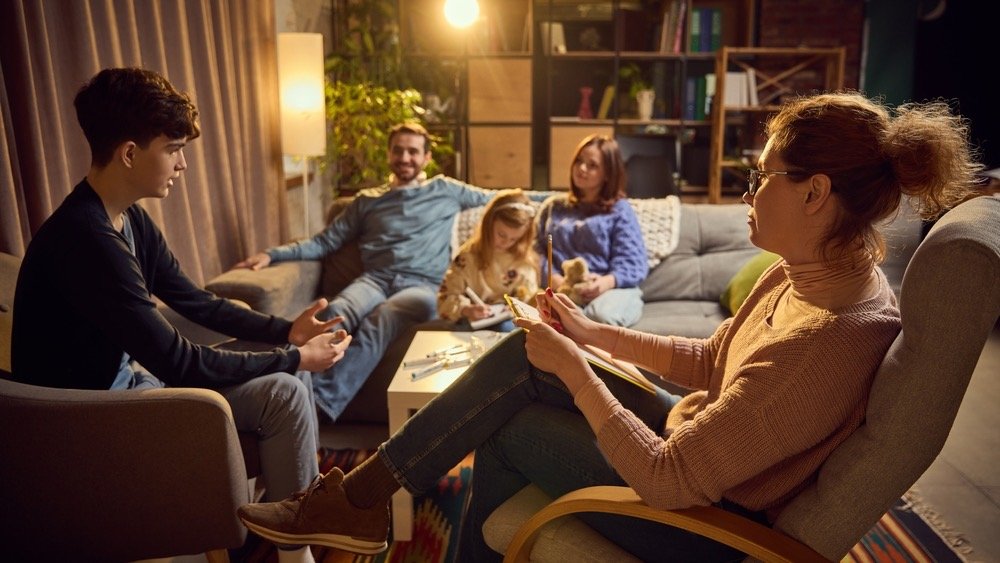
Bringing two families together under one roof is one of the most hopeful — and most complex — things a family can do. You’re building something new out of love and commitment, but you’re also asking multiple people with different histories, habits, attachment styles, and expectations to form a cohesive unit. It’s no wonder that blended families face unique challenges that traditional family structures simply don’t encounter.
If you’re part of a blended family and feeling like things are harder than you expected, we want you to know: that’s completely normal. The challenges you’re facing aren’t a sign that your family is failing — they’re a sign that you’re doing something genuinely difficult, and most blended families navigate similar struggles. The good news is that with the right understanding and support, blended families can thrive. In this therapist’s guide, we’ll explore the most common blended family challenges and provide practical strategies for building the harmony your family deserves. For a comprehensive look at how professional support can help, visit our family therapy guide.
Understanding the Unique Dynamics of Blended Families
Before diving into specific challenges and solutions, it’s important to understand why blended families operate differently. Unlike first-marriage families, blended families are built on a foundation that includes loss — whether through divorce, death, or the end of a previous relationship. Every member of the blended family carries this history with them, and it shapes how they approach new relationships.
Children in blended families didn’t choose their new family structure. They may be grieving the loss of their original family unit, adjusting to new authority figures, sharing space with step-siblings they barely know, and navigating loyalty conflicts between biological parents. Meanwhile, the adults are trying to build a strong partnership while simultaneously co-parenting across households, establishing new routines, and managing complex emotional terrain.
Research from the Stepfamily Foundation suggests that it takes an average of five to seven years for a blended family to fully integrate and develop its own sense of identity. That timeline may feel discouraging, but it’s actually liberating — it means you can release the pressure to have everything figured out immediately and instead focus on steady, incremental progress.
Managing Loyalty Conflicts in Children
One of the most painful blended family challenges involves children’s loyalty conflicts. Kids may feel that accepting or loving a stepparent is a betrayal of their biological parent. They may resist bonding with a stepparent not because they dislike that person, but because they’re afraid it means being disloyal to Mom or Dad. These loyalty conflicts can manifest as defiance, withdrawal, or hostility toward the stepparent — behavior that can be deeply hurtful for everyone involved.
The most important thing parents and stepparents can do is avoid forcing the relationship. Children need explicit permission — ideally from both biological parents — to form a positive relationship with their stepparent without it threatening their existing bonds. Statements like, “It’s okay to have fun with your stepdad — loving him doesn’t mean you love me any less,” can be incredibly freeing for a child caught in the middle.
Stepparents should also resist the urge to rush into a parental role. The most successful stepparent-child relationships develop gradually, often starting as a mentoring or friendship role before deepening over time. Patience here isn’t passive — it’s strategic. When families struggle to navigate these complex emotional dynamics, it often helps to explore why we should stop minimizing trauma within families, because unacknowledged grief and loss often fuel loyalty conflicts.
Navigating Discipline and Parenting Differences
“You’re not my real mom/dad!” is perhaps the most commonly cited blended family conflict, and it usually surfaces around discipline. When a stepparent attempts to enforce rules or consequences, children may resist, and biological parents may feel protective or undercut the stepparent’s authority — creating a cycle of frustration and resentment.
The most effective approach, according to family therapy research, is for the biological parent to remain the primary disciplinarian in the early stages of blending while the stepparent focuses on building rapport and trust. This doesn’t mean the stepparent has no authority — it means authority is earned through relationship rather than assumed through role. Over time, as trust deepens, the stepparent can take on a more active parenting role.
Equally important is that the couple present a united front. Parenting disagreements should be discussed privately, not in front of the children. When kids sense a divide between the adults, they may exploit it — not out of malice, but because it feels safer to keep the adults separated than to risk the vulnerability of true blending. Couples who establish shared parenting values and resolve family conflicts constructively create a more stable, predictable environment for every member of the household.
Building Relationships Between Step-Siblings
When children from different families are asked to live together as siblings, the adjustment can be enormous. Step-siblings may differ in age, temperament, family culture, and household rules they’re accustomed to. Jealousy over shared parental attention, disputes over personal space and belongings, and competition for their biological parent’s loyalty are all common friction points.
Creating opportunities for step-siblings to bond organically — through shared activities, collaborative projects, or family traditions that belong uniquely to the blended family — is far more effective than pressuring them to “love each other like real siblings.” Forced closeness often backfires, especially with older children and teenagers who value autonomy and choice.
It’s also important to honor each child’s need for individual space and time with their biological parent. Blending doesn’t mean every moment must be shared. Children who feel secure in their one-on-one relationship with their biological parent are actually more open to forming connections with step-siblings and stepparents. Balance is key — shared family time builds the new unit, while individual time preserves the bonds that existed before.
Setting clear, fair household expectations that apply equally to all children — biological and step — helps prevent perceptions of favoritism. When rules differ for different children without clear rationale, resentment festers quickly. Family meetings where everyone has a voice in establishing household norms can promote buy-in and a sense of shared ownership.
Strengthening the Couple Relationship at the Center
In the midst of managing children’s emotions, navigating co-parenting with ex-partners, and adjusting to a new household structure, many blended-family couples neglect the very relationship that holds everything together. The couple bond is the foundation of the blended family — when it’s strong, the entire family benefits; when it weakens, every other relationship in the home feels the strain.
Protecting couple time is not selfish — it’s essential. Regular date nights, brief daily check-ins, and shared goals for the family all reinforce the partnership. It’s equally important to be patient with each other during the blending process. Stepparents may feel like outsiders in their own home. Biological parents may feel torn between their children and their partner. Acknowledging these struggles openly, without judgment, builds intimacy and trust.
Couples in blended families often benefit enormously from the benefits of family therapy — not because something is wrong, but because blending families is inherently complex and having professional guidance prevents small issues from becoming entrenched patterns. Many couples find that even a few sessions focused specifically on their blended family dynamics can provide the clarity and tools they need to move forward with confidence.
Handling Co-Parenting Across Households
Blended families rarely exist in isolation. Most involve co-parenting relationships with ex-partners, which introduces another layer of complexity. Different rules in different households, scheduling conflicts, communication breakdowns between co-parents, and children who learn to play one household against another are all common challenges.
The gold standard for co-parenting across households is what therapists call a “business-like” relationship — respectful, boundaried, and focused on the children’s best interests rather than the adults’ unresolved emotions. This is easier said than done, especially when the divorce or separation was painful, but it’s profoundly important for children’s adjustment.
Practical strategies include using shared digital calendars or co-parenting apps to manage logistics, keeping communication focused on the children rather than personal grievances, maintaining consistent core rules across both households (bedtimes, homework expectations, screen time limits), and never placing children in the middle of adult conflicts. When co-parenting feels impossible, a family therapist or mediator in South Florida can help establish healthier communication frameworks.
Allowing Time and Celebrating Small Wins
Perhaps the most important piece of advice we offer blended families in our Miami practice is this: give yourselves time, and celebrate the small victories along the way. A successful blended family isn’t built in months — it’s built in years of small, consistent acts of kindness, patience, understanding, and repair.
The stepchild who shares a genuine laugh with their stepparent. The step-siblings who voluntarily choose to play together. The couple who navigates a disagreement about parenting without it escalating into a fight about loyalty. These moments may seem small, but they represent the building blocks of a family that is genuinely integrating and growing.
Tracking progress rather than perfection helps blended families maintain hope during the inevitably difficult stretches. Keeping a family journal or having regular family meetings where members share what’s going well — alongside what needs improvement — can foster a culture of gratitude and growth rather than criticism and discouragement.
Frequently Asked Questions
How long does it take for a blended family to feel like a “real” family?
Most family therapists and researchers agree that blended families take an average of five to seven years to fully integrate. This doesn’t mean things are miserable for years — many families experience increasing connection and harmony well before that. It simply means that deep, organic family bonds take time to develop, and rushing the process often creates more problems than it solves.
Should we start family therapy before problems arise?
Absolutely. Proactive therapy is one of the most effective investments a blended family can make. A therapist can help you anticipate common challenges, establish healthy communication patterns early, and create a family culture that supports everyone’s adjustment. Think of it as building a strong foundation rather than waiting for cracks to appear.
How do we handle holiday traditions when merging two families?
Holidays are often a flashpoint for blended families because traditions carry deep emotional significance. The best approach is to honor some traditions from each original family while intentionally creating new traditions that belong to the blended family. Involve everyone — especially the children — in deciding which traditions to keep and what new ones to start. Flexibility and collaboration are key.
What role should the stepparent play in disciplining children?
In the early stages of blending, the biological parent should handle most discipline while the stepparent focuses on building a trusting relationship with the child. Over time, as the bond strengthens, the stepparent can take on more authority. The crucial factor is that both adults agree on expectations privately and present a consistent message to the children.
Is it normal for blended family members to feel like they don’t belong?
Yes, this is very common, particularly in the early years. Children may feel displaced by new siblings. Stepparents may feel like outsiders. Even biological parents may feel torn between competing loyalties. Acknowledging these feelings openly — rather than dismissing them — is the first step toward creating a genuine sense of belonging for everyone.
Ready to Take the Next Step?
At Innovative Counseling, our licensed therapists in Miami specialize in blended family dynamics and family therapy. Whether you prefer in-person sessions at our Kendall office or online therapy from anywhere in Florida, we’re here to help.
Book Your Free 15-Minute Consultation →
Your journey to healing starts here.
Take the first step towards a brighter future with Innovative Counseling – where innovation meets compassion.



