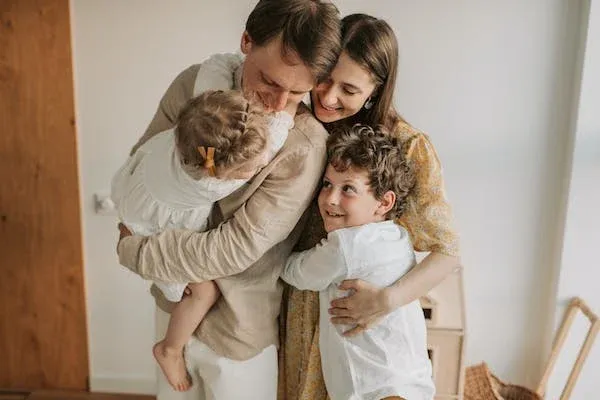
A serious diagnosis is delivered to one person and lands on everyone. Within weeks a household can reorganise completely — who does what, who is told what, who is allowed to be upset — and almost none of it is discussed. It simply happens.
Most of the strain that follows comes from that silent reorganisation rather than from the illness itself.
What actually shifts
Roles change overnight, without discussion
The parent who managed the household may now need care. A partner becomes a caregiver, a coordinator of appointments, and often the sole earner. An eldest child quietly takes on cooking, translating at appointments, or minding younger siblings. Nobody agrees to any of this; it is absorbed.
Everyone protects everyone else
The most common pattern we see. The patient minimises symptoms to spare the family. The spouse hides how frightened they are. The children act fine to avoid adding to the load. Each person is being kind, and the combined result is a household where nobody can say anything true.
Emotions arrive in the wrong order
Anger at the person who is ill. Resentment about a life on hold. Relief, in long illnesses, which brings immediate guilt. These feelings are normal and almost universally treated as shameful, so they go unspoken and leak out sideways as irritability over trivia.
The caregiver disappears
Usually one person absorbs most of it — often a spouse or eldest daughter — while everyone's attention, reasonably, is on the patient. Caregiver exhaustion tends to be noticed only when something breaks.
What children do with it
Children almost always know something is wrong. What they do not have is accurate information, so they construct their own — and their version is usually worse, and frequently includes being somehow responsible.
Age matters. Young children may regress, become clingy, or develop stomach aches and sleep problems. School-age children commonly become anxious about the well parent too, and start monitoring. Teenagers often go the other way — appearing indifferent, spending more time out, which is regularly misread as callousness when it is avoidance.
Watch particularly for the child who becomes too good: no demands, no problems, quietly managing everything. That child is not coping better than their siblings. They have concluded their needs cannot be afforded, and they are usually the last to be offered help.
What helps
- Tell children the truth, at their level. Simple, accurate, age-appropriate. Name the illness. Say what will change concretely — appointments, hospital stays, hair, tiredness. Say plainly that it is not their fault, and that they cannot catch it. Silence does not protect children; it leaves them alone with a worse version.
- Do not promise outcomes you cannot guarantee. "The doctors are doing everything they can, and we will always tell you what is happening" holds up. "Everything will be fine" does not, and if it breaks, they stop believing anything else you say.
- Make the roles explicit. Say out loud who is doing what, review it, and keep it age-appropriate. Ask what each person is actually carrying.
- Protect one ordinary thing per child. Practice, a club, a standing outing. Continuity matters more than grand gestures.
- Let the ill parent stay a parent. They may not manage the school run and can still hear about the day, help with homework, set boundaries. Losing the role entirely is often harder than the symptoms.
- Give the caregiver an outlet outside the family, before the crisis point.
- Allow the ugly feelings to be spoken. Anger, resentment, and relief are normal. Naming them in a safe setting reduces their pressure; suppressing them does not.
Where family therapy comes in
Family therapy after a diagnosis is not about processing grief in advance. It is practical work: making the invisible reorganisation visible and negotiable.
Sessions typically cover who is carrying what and whether it is sustainable; what the children have actually understood, which is often not what was said; giving each member a place to say the thing they have been protecting everyone else from; and rebuilding some ordinary family life alongside the illness rather than suspending it indefinitely.
It is often short and periodic — a few sessions at diagnosis, more at a change in treatment or prognosis — rather than continuous.
Where one person is struggling in their own right, individual work runs alongside: grief counseling, depression therapy, or anxiety therapy. For children and teenagers, teen counseling gives them somewhere to be honest without managing a parent's reaction — frequently the single most useful thing a family arranges.
Telling school, and telling extended family
Two practical decisions that families often postpone and later wish they had made sooner.
School. Telling a child's school is usually worth doing even when the child seems fine. A teacher who knows can interpret a change in behaviour correctly instead of as defiance or laziness, can quietly relax a deadline, and can flag concerns early. You control the detail — "there is serious illness at home" is enough, and you can say explicitly that you would rather it not be raised with your child unless they raise it first.
Extended family and friends. The instinct is to manage information tightly, which is understandable and expensive: it means the household repeats the same update dozens of times while declining offers of help. A single person nominated to pass on news, and a concrete list of what would genuinely help — meals, lifts, childcare on treatment days — converts vague goodwill into actual support.
Both decisions also lift something off the person who is ill, who otherwise ends up managing everyone else's reaction on top of treatment.
When to get help sooner
Consider it if a child's functioning has changed and stayed changed, if the caregiver is exhausted or withdrawn, if the household has stopped talking about the illness entirely, if conflict has become constant, or if a child has taken on responsibilities well beyond their years. Seek help promptly for any self-harm or talk of not wanting to be here — in the US, call or text 988.
Getting started
We work with families in our Miami office and by telehealth across Florida, which helps when someone is in treatment and travel is difficult. Family sessions are self-pay at $130 for 50 to 60 minutes; individual counseling can be billed to insurance.
See family therapy or when to consider family therapy. Start with a free 15-minute consultation — contact us or call (786) 224-7111.
Frequently Asked Questions
How much should we tell the children?
Tell them the truth at a level they can hold: name the illness, describe what will change concretely, and say clearly that it is not their fault and not catchable. Children almost always know something is wrong, and in the absence of accurate information they invent a worse version.
My child seems completely fine. Is that a bad sign?
It can be. Watch for the child who becomes unusually good and undemanding — often they have concluded their needs cannot be afforded right now. They are frequently the last to be offered support and the ones who need it.
Is it normal to feel angry at the person who is ill?
Yes, and it is extremely common. Anger, resentment about a life on hold, and even relief in long illnesses are normal responses. They cause the most damage when they go unspoken and surface sideways as irritability.
When should we start family therapy?
Many families benefit from a few sessions shortly after diagnosis, when roles are being reorganised, and again at changes in treatment or prognosis. It is often periodic rather than continuous.
Should the ill parent attend?
Usually yes, where they are well enough. Part of the work is helping them remain a parent rather than only a patient, which is often harder to lose than the physical symptoms.
Is family therapy covered by insurance?
Not at our practice — family sessions are self-pay at $130 for 50 to 60 minutes. Individual counseling, including for a child or the caregiver, can be billed to insurance.