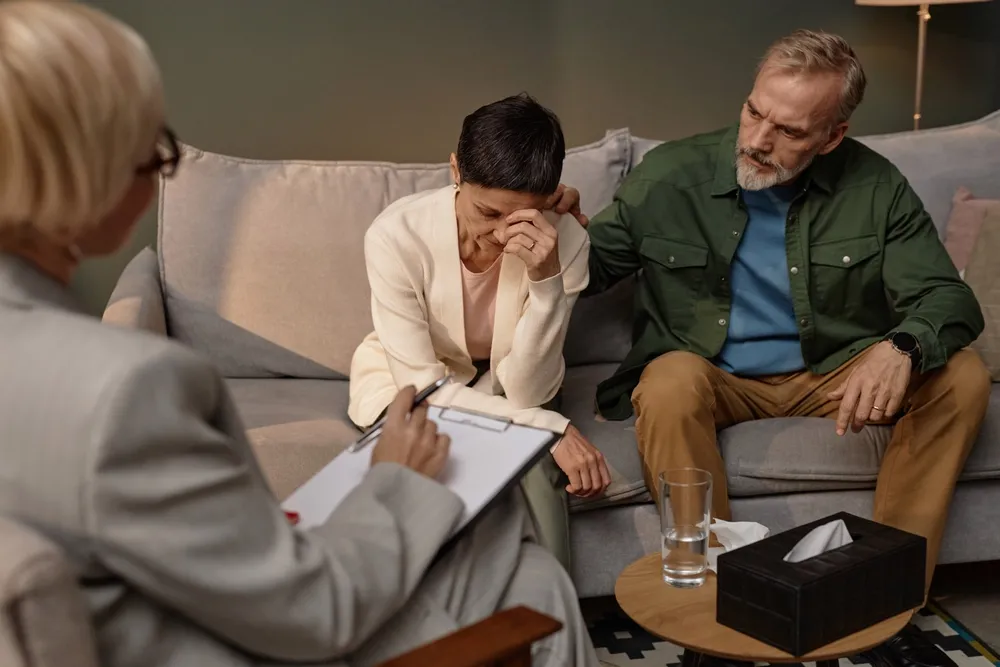
- The immediate aftermath of discovering an affair creates emotional whiplash.
- Rebuilding a marriage after cheating requires a sustained, deliberate effort.
- An affair permanently alters the emotional architecture of a partnership.
- Choosing to stay together does not erase the trauma of the betrayal.
Staying together after an affair involves navigating intense emotional pain, uncertainty, and relational instability. Emotional recovery from infidelity is a non-linear process that requires rebuilding emotional safety and trust through consistent actions. Therapy provides a structured space to process grief and clarify relationship dynamics without forcing a specific outcome.
The short answer: many couples do stay together after an affair. Recovery usually depends on the affair ending, the partner who had it taking full responsibility and answering questions honestly, and both partners rebuilding trust through consistent behavior over time, often with a couples therapist. There is no fixed timeline, and setbacks along the way are normal.
Deciding to continue a relationship after a betrayal introduces a profoundly complex emotional landscape. Couples often feel deeply torn, wanting the relationship to survive while simultaneously grappling with intense emotional pain. A person can desperately want to maintain their family and partnership, yet feel completely destabilized by the reality of the infidelity. This emotional confusion is a normal response to attachment rupture.
Couples staying together after betrayal frequently face significant uncertainty about the future. Attempting to function normally while feeling emotionally disoriented takes a massive toll on the nervous system. Partners who have been betrayed often experience intense grief, anger, and anxiety for an extended period, even when both individuals are committed to the relationship.
Surviving infidelity requires acknowledging that the relationship will never return to its previous state. The old relationship structure has ended, and couples must build a completely new dynamic. This new dynamic involves managing emotional ambiguity, holding space for conflicting feelings, and learning how to rebuild emotional safety.
Couples therapy gives you both a structured place to work through an affair, at a pace that is right for you. Our therapists use the Gottman Method and Emotionally Focused Therapy, in Miami or online across Florida.
Why Does Staying Together After Betrayal Feel Emotionally Confusing?
The immediate aftermath of discovering an affair creates emotional whiplash. The human brain struggles to reconcile the image of a safe partner with the reality of betrayal.
How Can Love and Emotional Pain Exist at the Same Time?
Attachment bonds do not simply disappear when a betrayal occurs. A person can feel deep love and attachment toward their partner while simultaneously experiencing profound psychological pain caused by that same partner. This emotional contradiction often leaves individuals feeling paralyzed. Attachment theory, first set out by the psychiatrist John Bowlby, describes how people naturally turn to their closest attachment figure for comfort when distressed. When that primary attachment figure is also the source of the distress, the nervous system becomes incredibly confused.
Why Do Many Couples Feel Unsure Whether They Are Making the “Right” Decision?
Emotional uncertainty dominates the early stages of relationship recovery after cheating. Partners frequently experience pressure from family, friends, or societal expectations to either leave immediately or forgive quickly. This external pressure intensifies internal fears of making the wrong choice. A betrayed partner might fear regretting the decision to stay, while the participating partner might fear the relationship will never heal. Emotional ambivalence is a valid and expected part of navigating the aftermath of an affair.
Why Does Emotional Stability Change Day to Day After Infidelity?
Following an affair, emotional stability rarely remains constant. A couple might share a genuinely connected afternoon, only to have a severe argument that evening. These emotional swings are driven by nervous system instability. Hope and hopelessness often alternate rapidly. Partners may oscillate between desiring intense closeness and needing immediate withdrawal. Recognizing these fluctuations as trauma responses rather than relationship failures helps couples manage the day-to-day reality of staying together after an affair.
Is It Common for Couples to Stay Together After Cheating?
Yes. A 2026 study in the Journal of Marital and Family Therapy starts from the observation that many people choose to stay with their partner after infidelity, even though there is little research on how they make that choice. The researchers interviewed 11 betrayed partners who stayed. Their accounts clustered around nine themes: their own stance on infidelity, whether and whom to tell, their reasons to stay, the apology, social support, expectations about sexual intimacy, rebuilding trust, therapy, and other resources.
That list is a useful map for your own decision. Staying is not one choice made on the day of discovery. It is a series of smaller decisions about telling people, about what an apology needs to include, about intimacy and about what help to get, and it is fine to make them one at a time.
What to Do in the First Weeks After an Affair
The first days and weeks after disclosure or discovery shape what comes next. Becky Davenport, Ph.D., a licensed marriage and family therapist, writes that the partner who had the affair being consistently emotionally responsive in this period is the single biggest predictor of the outcome she sees, and that defensiveness can deepen the injury dramatically. In the Gottman Institute's trust-revival model, this first phase is called Atone: the partner who had the affair takes full responsibility, without excuses or blame, and becomes transparent.
| If you had the affair | If you were betrayed | |
|---|---|---|
| First priority | End the affair and any contact with the affair partner; disclose it if they reach out | Get safe and steady: sleep, food, one or two trusted people to lean on |
| Responsibility | Own the choice fully; no excuses and no blaming the relationship, yet | You do not have to decide about the future right away |
| Questions | Answer honestly, including the same question more than once | Ask what you need to know; think twice about graphic sexual detail you cannot unsee |
| Transparency | Offer openness about phone, schedule and whereabouts for a period | Notice whether words and actions match over time |
| Big feelings | Stay present for your partner's anger and grief without defending yourself | Expect waves of anger, numbness and hope; they are normal |
| Help | Consider individual therapy for shame and for understanding why it happened | Consider individual support as well as couples counseling |
On the question of detail, Dr. Davenport's guidance is to be honest but not "too honest": hiding facts that later come out can set recovery back badly, while a flood of sexual specifics often hurts more than it helps. Our guides to non-negotiables after an affair and therapy for the partner who cheated go further.
If the relationship involves abuse, threats or control, couples counseling is not recommended, because it can put the abused partner at risk and the therapist may not know what is happening. The National Domestic Violence Hotline is available 24/7 at 1-800-799-7233.
How Do You Rebuild a Relationship After an Affair?
Rebuilding a marriage after cheating requires a sustained, deliberate effort. Rushing the healing process often produces a surface peace that crumbles under the next stress.
Why Does Emotional Safety Need to Be Rebuilt Slowly?
Emotional safety is the foundation of any secure relationship. Betrayal shatters this foundation completely. Rebuilding emotional safety requires the participating partner to demonstrate absolute transparency, honesty, and empathy over a long period. The betrayed partner needs time to observe these behaviors and slowly allow their nervous system to recognize the environment as safe again.
How Is Trust Rebuilt Through Consistency Rather Than Quick Reassurance?
Trust cannot be rebuilt through promises or apologies alone. Rebuilding trust after an affair depends entirely on consistent, observable behavior changes over time. Quick reassurance often feels dismissive to a betrayed partner. If you want to understand more about this specific dynamic, you can explore can trust be rebuilt after infidelity. Trust requires the participating partner to willingly answer questions, maintain open communication, and align their actions with their words consistently.
Why Do Conversations About the Affair Repeat Many Times?
A common source of frustration in couples therapy after an affair is the need to revisit the same conversations repeatedly. The betrayed partner often needs to ask the same questions multiple times to process the information and check for consistency. This repetition is a cognitive processing mechanism, not an attempt to punish the other person. Our guide to questions to ask after an affair, and ones to skip can help you decide what is worth asking.
Why Do Emotional Triggers Continue Long After Disclosure?
Emotional triggers can persist for months or years after the initial disclosure. A specific location, a movie plot, or an unexplained phone notification can instantly activate the betrayed partner’s fight-or-flight response. Managing these triggers requires both partners to acknowledge the pain without defensiveness.
Why Does Healing Rarely Happen in a Straight Line?
The expectation of steady, forward progress causes immense frustration for couples recovering from infidelity together. Healing rarely happens in a straight line. Setbacks are inevitable. Couples will experience periods of calm followed by sudden resurgences of grief or anger. Accepting this non-linear trajectory helps reduce the panic that arises when a difficult day occurs.
Still deciding whether to stay? A couples therapist can help you both talk it through without pressure.
How Does Infidelity Change the Emotional Dynamic of a Relationship?
An affair permanently alters the emotional architecture of a partnership. Navigating these changes requires psychological maturity and a willingness to confront uncomfortable new realities.
Why Might Hypervigilance and Anxiety Increase After Betrayal?
Hypervigilance is a natural protective response to psychological injury. The betrayed partner often becomes intensely observant of their partner’s mood, schedule, and phone habits. This heightened state of alert is the brain’s attempt to prevent future surprises and protect against further emotional damage.
How Can Emotional Distance Develop on Both Sides?
As couples attempt to protect themselves from further pain, emotional distance frequently develops. The betrayed partner may build walls to guard their vulnerability. The participating partner may withdraw due to shame, guilt, or a fear of saying the wrong thing. This mutual distancing can make the relationship feel incredibly lonely, even when both people are in the same room.
Why Do Couples Feel Closer in Certain Moments and Detached in Others?
The push-and-pull dynamic is incredibly common. Sometimes, the crisis of an affair strips away superficial issues and forces a level of honest communication that creates profound moments of closeness. In other moments, the sheer weight of the betrayal causes complete emotional detachment.
How Do Intimacy and Vulnerability Become More Complicated?
Physical and emotional intimacy often become fraught with complexity. Vulnerability requires trust, which is precisely what has been broken. Engaging in intimacy may trigger grief or intrusive images for the betrayed partner. Addressing these complications gently, without pressure or expectations, is crucial for long-term emotional recovery after betrayal.
Why Doesn’t the Pain Stop When You Decide to Stay Together?
Choosing to stay together does not erase the trauma of the betrayal. Acknowledging the ongoing nature of the pain is essential for realistic emotional recovery.
Can Emotional Pain Continue Even When Both Partners Are Trying?
Both individuals can be fully committed to couples therapy, engaging in healthy communication, and actively working on the relationship, yet profound emotional pain may still exist. Effort does not instantly neutralize grief. The presence of pain indicates that the psychological wound is healing, not that the reconciliation is failing.
What Is the Difference Between Forgiveness and Emotional Recovery?
Forgiveness and emotional recovery are completely separate processes. A person may eventually choose to forgive their partner, but that choice does not immediately heal the nervous system or restore trust. Emotional recovery requires processing the trauma and rebuilding a sense of self, which takes significantly more time than a declaration of forgiveness.
Why Do Some People Feel Guilty for Continuing to Struggle?
Betrayed partners often experience secondary guilt for their inability to “move on” quickly enough. They may feel they are holding the relationship hostage to their pain. Conversely, participating partners may feel guilty for the ongoing damage they observe. Validating this struggle helps alleviate the shame associated with long-term recovery.
How Does Grief Exist Alongside Reconciliation Efforts?
Staying together after an affair involves mourning the relationship you thought you had. This grief exists right alongside the effort to build a new relationship. Acknowledging this dual reality allows couples to process their sorrow without interpreting it as a sign that the relationship must end.
How Infidelity Recovery Affects Your Mental Health
The stress of an affair frequently spills over into individual mental health, affecting daily functioning and overall well-being. Many couples therapists describe the discovery of an affair as a traumatic event for the betrayed partner, and the reactions that follow (intrusive images, constant checking, poor sleep) can look like a trauma response. Recognizing that helps both partners treat the symptoms as injuries to care for, not as overreactions. Our page on betrayal trauma after infidelity explains how these reactions compare with PTSD.
Can Anxiety and Emotional Hypervigilance Become Chronic?
When the nervous system remains in a heightened state of alert for a prolonged period, anxiety can become chronic. If you are experiencing constant worry or physical symptoms of stress, exploring anxiety therapy or trauma therapy can provide necessary individual support alongside relationship work.
How Does Emotional Exhaustion Build Over Time?
Processing betrayal demands an immense amount of cognitive and emotional energy. Over time, this constant processing leads to profound emotional exhaustion. Partners may find themselves lacking the energy to engage in hobbies, maintain friendships, or perform at their usual capacity.
Why Do Sleep and Emotional Regulation Become Harder?
Infidelity stress often disrupts sleep. Trouble falling asleep, vivid dreams, and frequent waking are common. Because sleep is deeply tied to emotional regulation, sleep deprivation makes managing daytime triggers significantly more difficult, creating a challenging feedback loop of exhaustion and reactivity.
How Do High-Functioning Adults Continue Struggling Internally?
High-functioning adults often excel at compartmentalizing their pain. They may perform perfectly at work and manage household responsibilities flawlessly while experiencing intense internal distress. This internal struggle is exhausting and often goes unnoticed by friends and colleagues.
How Can Emotional Burnout Affect Parenting and Daily Life?
Parents navigating infidelity recovery often face emotional burnout that impacts their patience and presence with their children. Acknowledging this limitation and seeking appropriate professional support is a responsible step toward protecting the entire family system during a crisis.
How Therapy Helps Couples Navigate Recovery Without Pressure
Therapy for infidelity recovery provides a neutral space for partners to process grief and rebuild emotional safety. A qualified therapist does not push a couple to stay together or separate, but rather helps them achieve clarity.
How Does Therapy Create Space for Honest Emotional Processing?
Couples therapy offers a structured environment where intense emotions can be expressed safely. A therapist helps moderate the conversation, ensuring that the betrayed partner feels heard and the participating partner can express remorse without collapsing into defensiveness.
How Do Couples Manage Emotional Reactivity With Professional Help?
Therapists teach couples specific techniques to manage emotional flooding. When heart rates elevate and the fight-or-flight response takes over, productive communication becomes impossible. Learning to recognize reactivity and take appropriate timeouts is a critical skill learned in therapy.
Can Therapy Help Clarify Emotional Needs and Relationship Patterns?
An affair never happens in a vacuum, though the participating partner is solely responsible for the choice to betray. Therapy helps uncover underlying relationship dynamics, unmet needs, and communication failures that existed before the infidelity, providing a roadmap for a healthier future relationship.
How Does Support Reduce Shame, Defensiveness, and Emotional Shutdown?
Shame is a powerful barrier to reconciliation. Participating partners often struggle with intense shame, which manifests as defensiveness or emotional shutdown. Therapy provides a non-judgmental space to address this shame, allowing the participating partner to remain emotionally present for the betrayed partner’s pain. Exploring individual therapy can also help partners manage these intense personal emotions.
Does Therapy Support Clarity, Whether Couples Stay Together or Not?
The ultimate goal of therapy after an affair is clarity. For many couples, clarity means identifying a path forward together. For others, clarity means recognizing that the relationship cannot be repaired. In either scenario, therapy provides the psychological tools necessary to make decisions from a grounded, thoughtful place rather than from a state of crisis.
When Does Staying Together After an Affair Feel More Complicated?
Certain situational factors add significant complexity to the recovery process, requiring nuanced navigation and specialized support.
How Do Long-Term Marriages and Shared Family Systems Impact Recovery?
Couples with decades of shared history face a unique set of challenges. The sheer volume of shared memories, financial entanglement, and established family roles makes the prospect of separation daunting, adding intense pressure to the reconciliation process.
What Unique Challenges Arise for Couples Raising Children Together?
Parents must navigate their own trauma while maintaining stability for their children. The desire to keep the family unit intact often drives the decision to stay, but it also creates immense pressure to heal quickly and present a united front, which can stifle authentic emotional processing.
How Does Recovering From Emotional Affairs Differ From Physical Affairs?
Emotional affairs involve deep emotional intimacy and secrecy, often without physical contact. Betrayed partners frequently find emotional affairs more difficult to overcome because the betrayal of trust centers on a deep emotional connection with an outside person. The recovery process requires rebuilding emotional exclusivity.
How Do Cultural, Religious, or Family Expectations Impact Marriage?
Couples often navigate intense external expectations regarding marriage and divorce. In diverse areas like Miami, FL, multicultural dynamics and strong community or family pressures can significantly influence a couple’s decisions. Concerns about social visibility, professional identity, and religious obligations often complicate the private work of emotional recovery.
How Does Online Therapy for Infidelity Recovery Work Across Florida?
For many couples, privacy is a primary concern following an affair. Telehealth therapy in Florida offers a secure, confidential way to access specialized support without the visibility of a waiting room. Online therapy provides the flexibility to schedule sessions during unstable periods, accommodating busy professional lives and family obligations. Couples can attend sessions together from the same room or log in separately from different locations, ensuring continuous support regardless of daily logistics.
Signs That Infidelity Stress Is Affecting Your Emotional Health
It is important to recognize when the stress of an affair is severely compromising individual psychological well-being. Deeply affected individuals often experience symptoms that require clinical attention. If you are struggling with chronic overthinking, emotional numbness, or an inability to mentally relax, you may be experiencing a trauma response. Other signs include persistent panic, severe irritability, intrusive thoughts, and profound emotional exhaustion. If you find yourself unable to stop analyzing details of the betrayal, reading about obsessive thoughts after being cheated on can provide helpful context.
Starting Therapy for Couples Recovering From Infidelity in Miami
Navigating the aftermath of an affair requires highly specialized, emotionally sophisticated support. Innovative Counseling provides comprehensive therapy for couples and individuals facing the complexities of infidelity recovery. Our clinicians are experienced in managing intense emotional instability, culturally aware of the diverse dynamics within Miami, and dedicated to providing a calm, non-judgmental space for healing.
Whether you are seeking clarity, trying to rebuild trust, or simply needing support to manage the emotional fallout, Innovative Counseling offers telehealth services accessible across Florida. We invite you to reach out when you are ready to begin the process of understanding and navigating your path forward. Couples counseling is self-pay at $130 per 50 to 60 minute session, our affair recovery counseling page explains how the work is structured, and you can start with a free 15-minute consultation. If you are struggling with thoughts of suicide, call or text 988 at any time.
Frequently Asked Questions About Staying Together After an Affair
Can relationships survive infidelity?
Yes. Many relationships survive infidelity when both partners commit to the hard work of rebuilding trust and honest communication, often with professional support. In one small, exploratory analysis of a couple therapy trial, couples dealing with an affair that had been revealed started out more distressed than other couples but improved in satisfaction at least as much by the end of treatment.
Is it common for couples to stay together after cheating?
Yes. Researchers writing in the Journal of Marital and Family Therapy note that many people choose to stay with their partner after infidelity. Reasons to stay, the apology, rebuilding trust, social support and therapy are among the themes betrayed partners describe in making that choice.
What should be the first steps after an affair?
The affair and contact with the affair partner end, the partner who had it takes full responsibility without excuses, and they answer questions honestly and offer transparency. The betrayed partner focuses on getting steady and does not have to decide about the future right away. Many couples start counseling in these first weeks.
What are the stages after an affair?
The Gottman Institute's trust-revival model describes three phases: Atone (responsibility, remorse and transparency), Attune (building a new relationship that meets both partners' needs) and Attach (rebuilding emotional and physical intimacy). Our guide to Atone, Attune, Attach explains each phase.
Can you stay friends with the affair partner after an emotional affair?
Usually not, if the goal is to rebuild the relationship. No contact with the affair partner, and promptly disclosing any contact that does happen, is one of the most common agreements couples make after an emotional or physical affair, because ongoing contact keeps the betrayal active. Where contact cannot be avoided, such as at work, couples agree on clear limits and full transparency.
Can a relationship go back to normal after cheating?
Not to the old normal, and most couples who recover say they would not want it to. The relationship that existed before the affair has ended. Couples who stay build a new one with clearer agreements, more honesty and, often, better communication than before.
Is it normal to still feel hurt while trying to stay together?
Yes, it is completely normal. Choosing to stay together does not eliminate the grief or trauma caused by the betrayal. Emotional pain often coexists with genuine efforts to repair the relationship over a long period.
How long does it take to rebuild trust after an affair?
There is no fixed timeline. The Gottman Institute says directly that there is no specific time frame for its trust-revival process, and figures you see online (six months, eighteen months, two years) are not rules. Trust grows as the participating partner shows consistent, transparent, empathetic behavior over time. Our guide to how long affair recovery takes explains what shapes the timeline.
Can couples therapy help after cheating?
It can. A small randomized pilot study published in 2023 found that couples who received Gottman Method Couples Therapy after an affair improved more in trust, conflict management, relationship satisfaction and sexual quality than couples in usual care. A trained therapist gives you a structured place to process intense emotions, manage reactivity, reduce shame, and clarify the next steps, whether that is reconciliation or a healthy separation. Couples therapy is not recommended when there is abuse in the relationship.
Why do emotional triggers continue even after reconciliation?
Emotional triggers continue because the brain categorizes the affair as a trauma. Sensory inputs associated with the betrayal can activate a deeply ingrained fight-or-flight response, even years after the relationship has largely stabilized.
Is forgiveness required to rebuild a relationship?
Forgiveness is a personal, internal process that often comes long after the relationship has begun to stabilize. A couple can actively work on rebuilding trust and emotional safety while the betrayed partner is still processing their ability to forgive.
Can infidelity recovery affect anxiety and mental health?
Infidelity recovery heavily impacts mental health. The stress often leads to chronic anxiety, hypervigilance, sleep disruption, and emotional exhaustion, frequently requiring individual therapy to manage the psychological toll.
Is online therapy effective for couples recovering from infidelity?
Many couples find it a good fit. Sessions follow the same structure as office sessions, with more privacy, easier scheduling, and the option for partners to join from different locations, which can help during volatile periods. Innovative Counseling offers affair recovery counseling by secure telehealth anywhere in Florida.
Your journey to healing starts here.
Take the first step towards a brighter future with Innovative Counseling – where innovation meets compassion.
Sources
- Mitchell, Brown, Spencer & Harris (2026). Staying Together After Infidelity: An Exploration of the Decision-Making Process of Recovery From the Perspective of the Injured Partner. Journal of Marital and Family Therapy, 52(1), e70110
- The Gottman Institute blog, Reviving Trust After an Affair (part 2): the Atone, Attune, Attach model
- Becky Davenport, Ph.D., LMFT-S, Institute for Couple and Family Enhancement: Relationship ICU Part 1, The First Days and Weeks After an Affair
- Irvine, Peluso, Benson, Cole, Cole, Gottman & Schwartz Gottman (2023). A Pilot Study Examining the Effectiveness of Gottman Method Couples Therapy Over Treatment-as-Usual Approaches for Treating Couples Dealing with Infidelity. The Family Journal
- Atkins, Eldridge, Baucom & Christensen (2005). Infidelity and behavioral couple therapy: optimism in the face of betrayal. Journal of Consulting and Clinical Psychology, 73(1), 144-150
- National Domestic Violence Hotline, Should I Go to Couples Therapy With My Abusive Partner?
- 988 Suicide & Crisis Lifeline